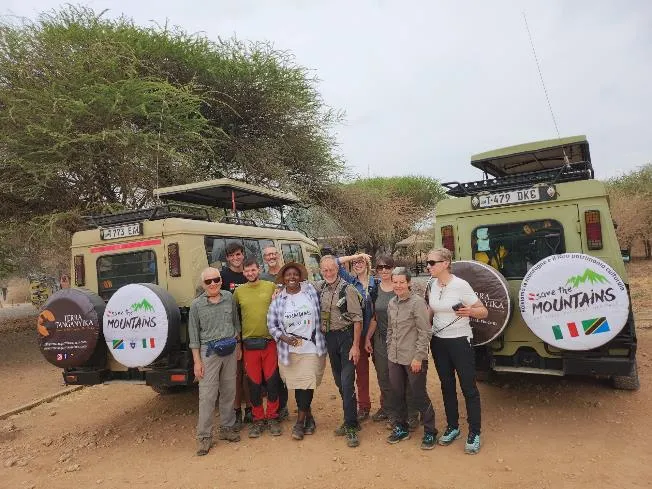
Save the Mountains and Their Cultural Heritage is a collaboration between Terra Tanganyika, CAI Bergamo — the Bergamo section of the Club Alpino Italiano — and Tanzania National Parks (TANAPA), through Kilimanjaro National Park (KINAPA). Its premise is simple: care for the mountain is care for everyone who lives below it.
Why it matters
What happens on the mountain reaches far beyond it
Kilimanjaro’s forests feed the rivers that sustain the farms and communities below, and its landscapes are inseparable from the lives and traditions of the people on its slopes.
5,895 m
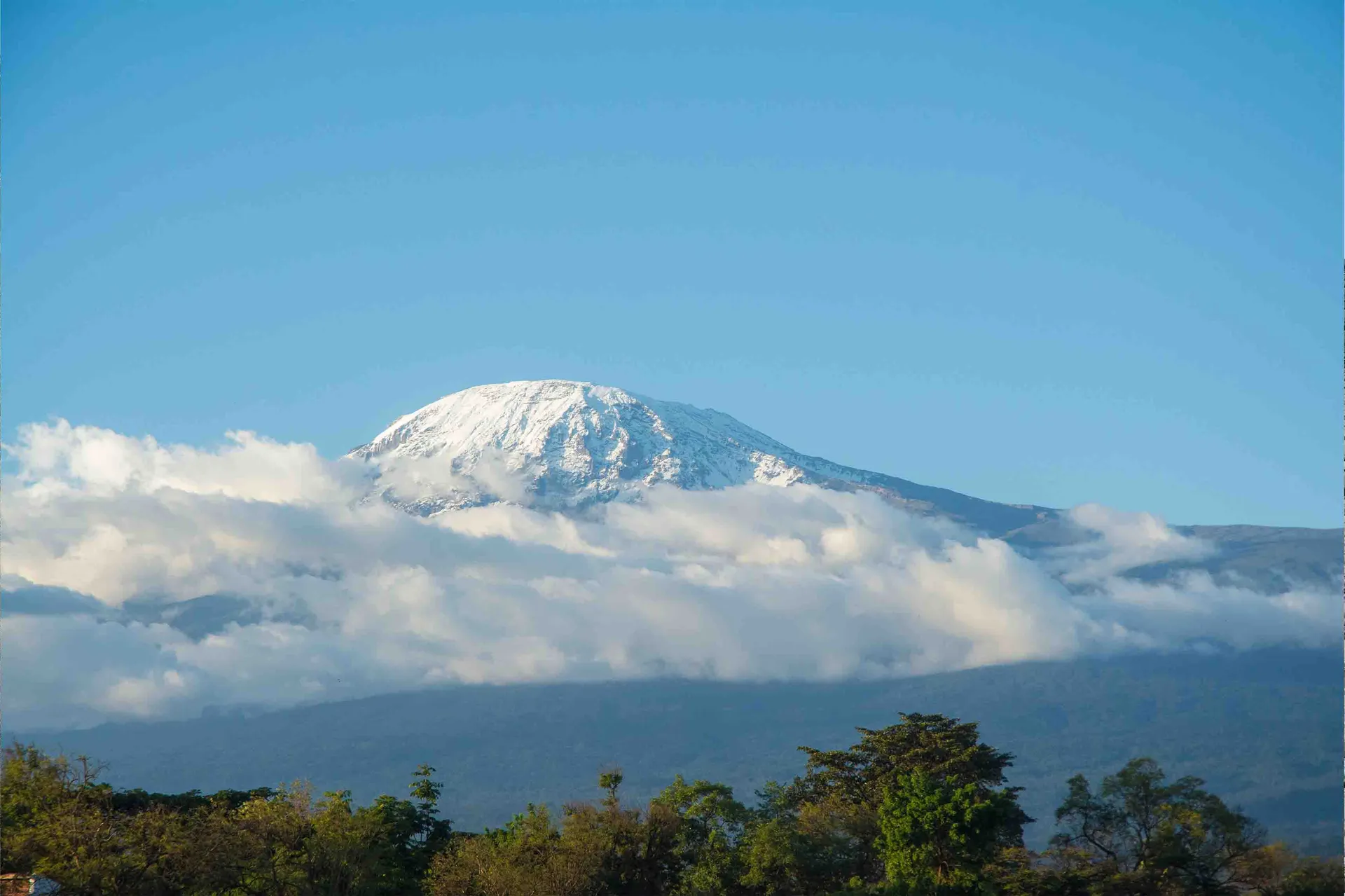
Africa’s highest point and the largest free-standing mountain in the world, built from three volcanic cones: Shira, Mawenzi and Kibo.
1,712 km²
The national park since 2005, when its boundary came down the slopes to take in the whole montane forest reserve.
2,500+ plants
Alongside some 140 mammal species and 179 highland birds. A UNESCO World Heritage Site.
What the mountain gives back
Water
For homes, hydroelectric power and irrigation across the land below.
Coffee
A real economic opportunity on the lower slopes, especially for young people and women.
Work
Direct and indirect jobs, and TZS 84 billion in park revenue in 2023/24.
Knowledge
A field site for local and international research, and support for the communities around it.
01The mountain — from the plains to Uhuru Peak
Seven climates on one mountain
KINAPA looks after everything above about 1,700 m. The farms below that line depend on the forest it protects.
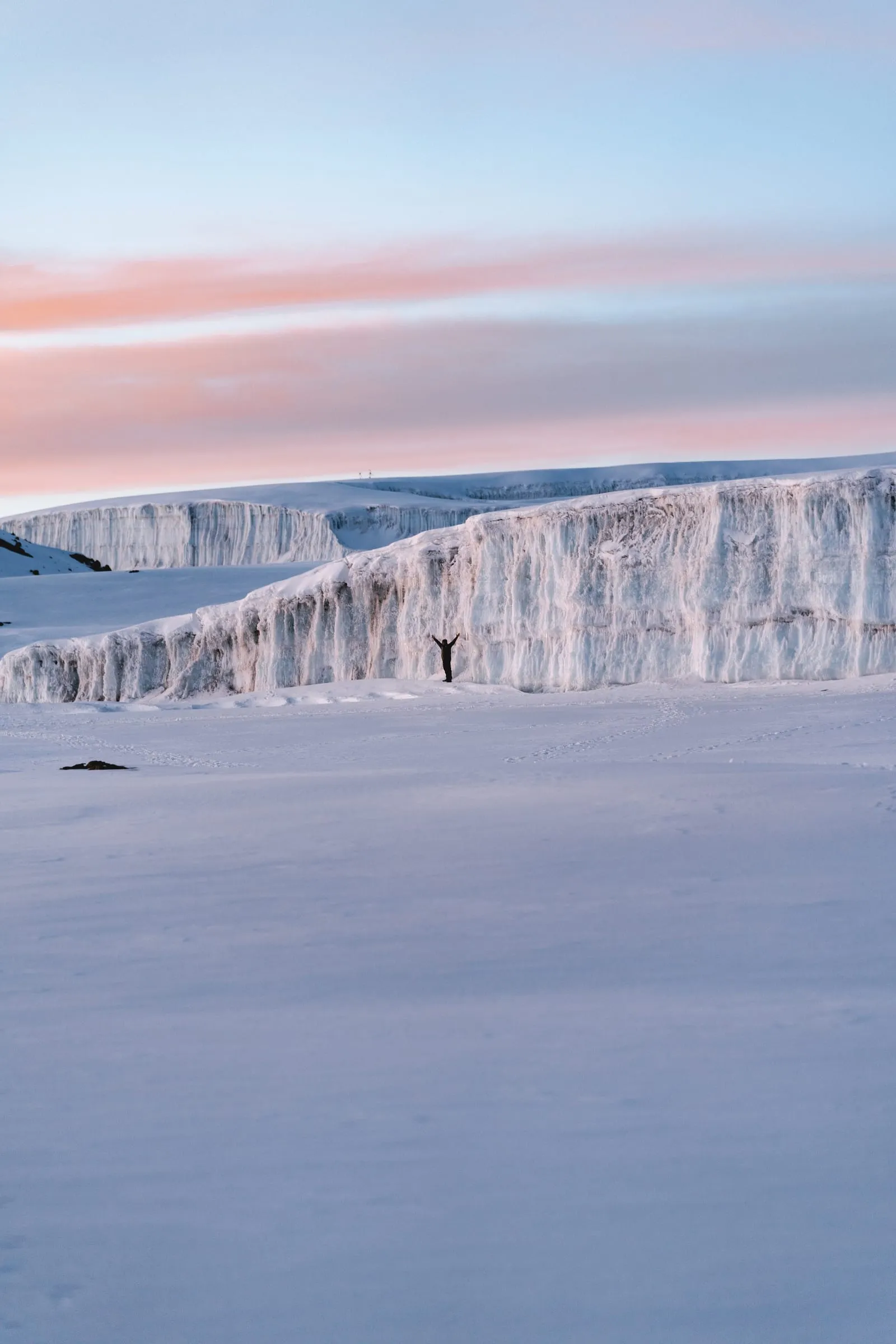
5,690–5,895 mCrater and iceThe summit and its ice cap, which is shrinking.
Above 4,100 mAlpine desert
Around 4,000 mAlpine cushionsLow Helichrysum cushion plants.
Around 3,500 mSubalpine heathErica bush and the giant lobelia, Lobelia deckenii.
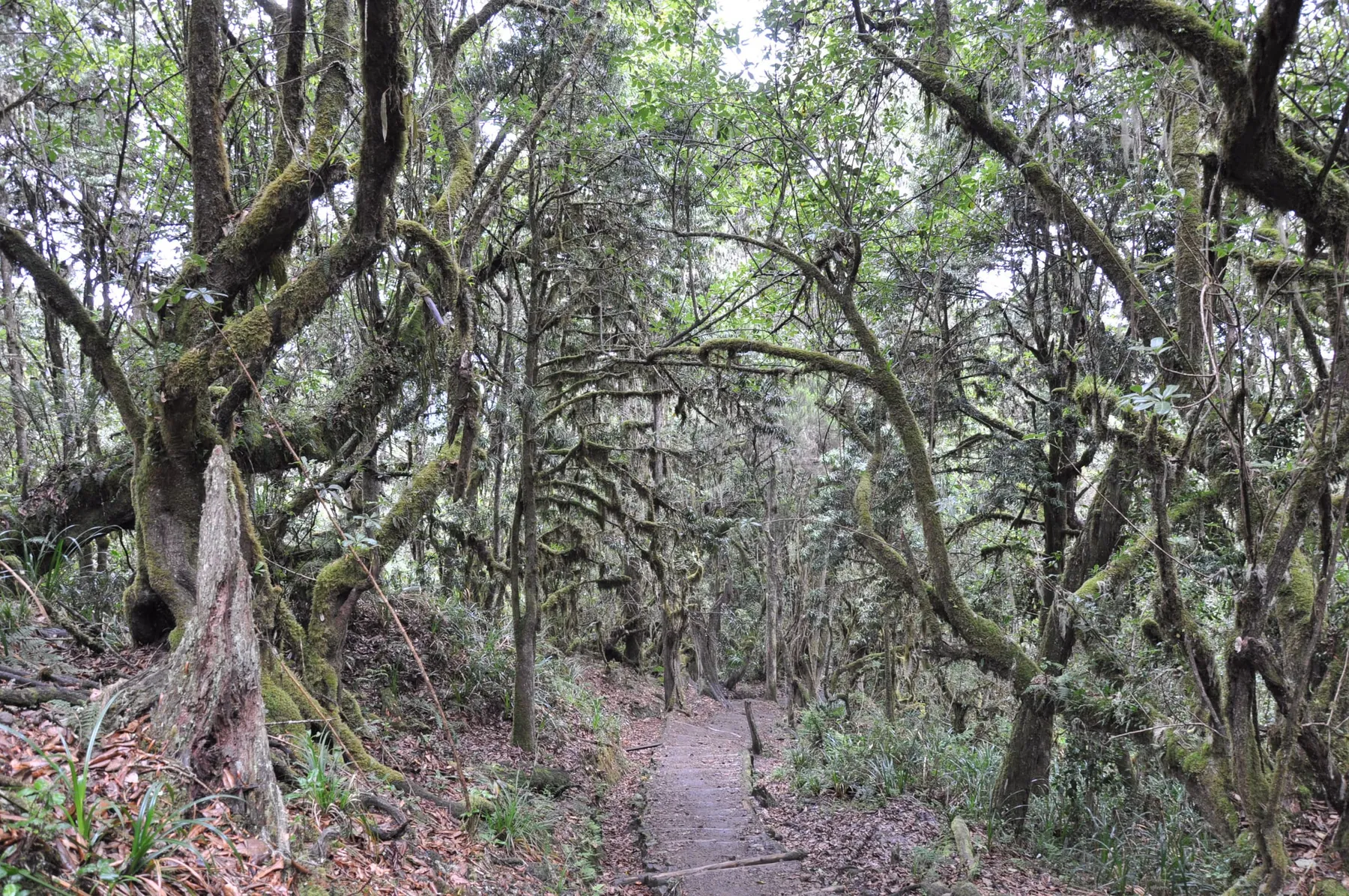
1,700–3,200 mMontane rainforestOcotea forest thick with epiphytes around 2,400 m, Podocarpus near 2,700 m. The national park begins here.
1,100–1,700 mCoffee and bananaAgroforestry farms, watered by the forest above.
700–1,100 mSavanna and farmland
02Pressures — what the park is up against
Well protected, and still fragile
KINAPA works within Tanzania’s national park, forest, wildlife and environmental laws, under the TANAPA Strategic Plan 2020–2025 and its own General Management Plan 2016–2026. Its teams cover resource protection, ecological monitoring, community outreach and tourism. The pressures are real all the same.
Climate change, and a summit ice cap retreating with it.
Land use on the park edge, invasive species and fire.
Illegal harvesting, encroachment on the boundary, and blocked migration routes and dispersal areas.
Conflict between people and wildlife.
The high cost of building infrastructure at altitude.
What the park is doing
Raising the montane forest from forest reserve to national park, to keep it whole.
Restoring the lower montane forest: invasive exotic species out, indigenous trees in.
Trash In, Trash Out: everything carried up the mountain is carried back down.
Managed disposal of plastic bags and water bottles inside the park.
03Objectives — from Italy to the world
Objectives we share
Mountain education and sustainability that move people toward a zero footprint.
A culture of sustainability, and a circular economy that regenerates itself.
Formative mountain experiences for young people, in learning and in life.
Responsibility toward future generations, love for the environment, and health in everyday life.
Recognition for the volunteer organisations committed to the mountains.
The promotion of mountaineering.
Physical activity, healthy lifestyles and wellbeing for everyone.
04The story so far — 2024 and 2025
From Bergamo to the Marangu gate
Two expeditions, and the meetings in Italy and Tanzania that built the collaboration around them.
2024 · Ponte San Pietro, Bergamo
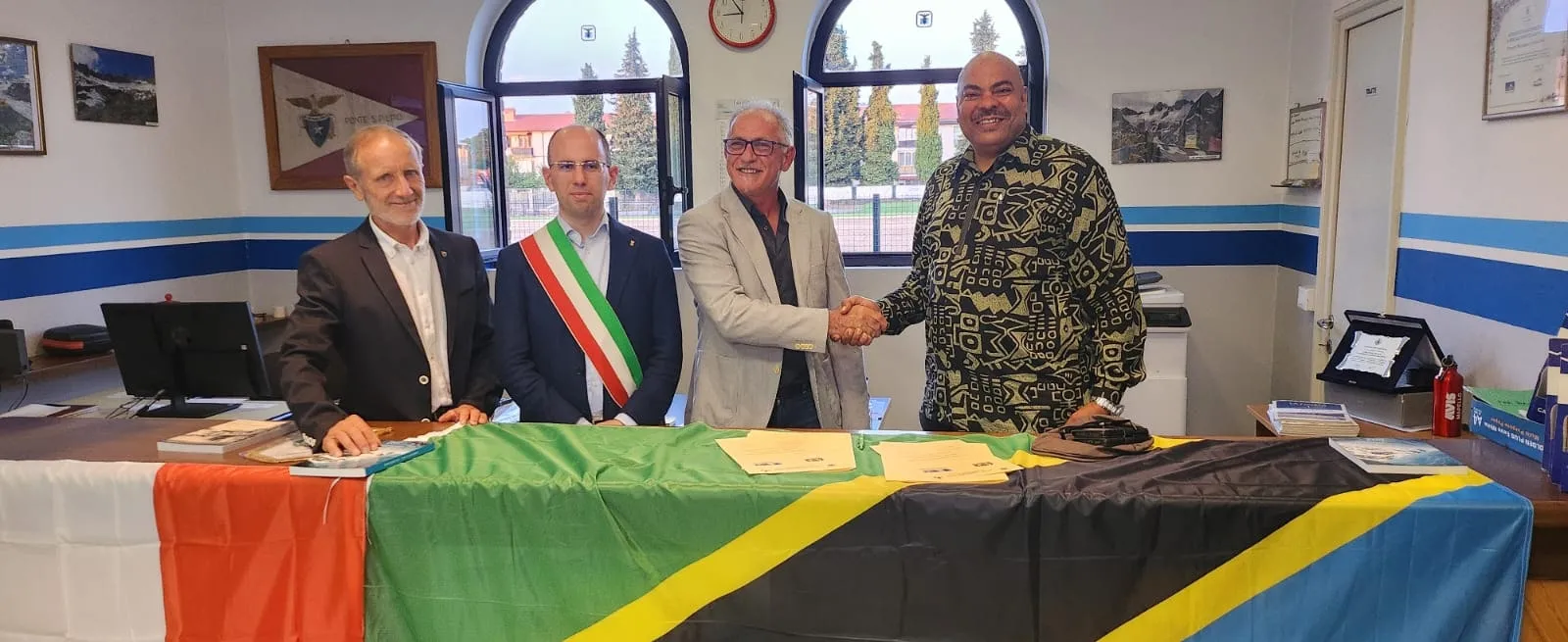
A handshake over two flags
CAI Bergamo meets Hon. Mahmoud Thabit Kombo, then Tanzania’s Ambassador to Italy and now its Minister for Foreign Affairs, with the Mayor of Ponte San Pietro, Matteo Macoli.
2024 · Kilimanjaro
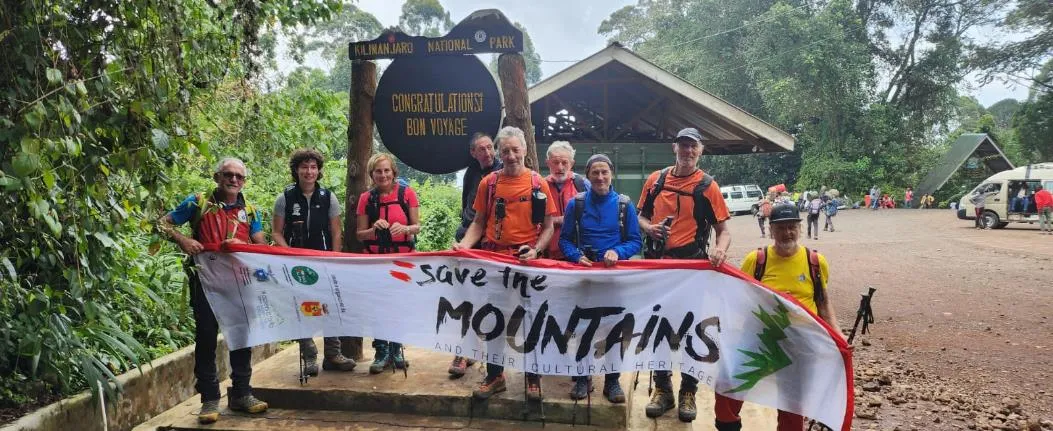
The first expedition
The first Save the Mountains climb on Kilimanjaro, and the first meetings with TANAPA to share the project.
Moshi · Dar es Salaam · Bergamo
Building the collaboration
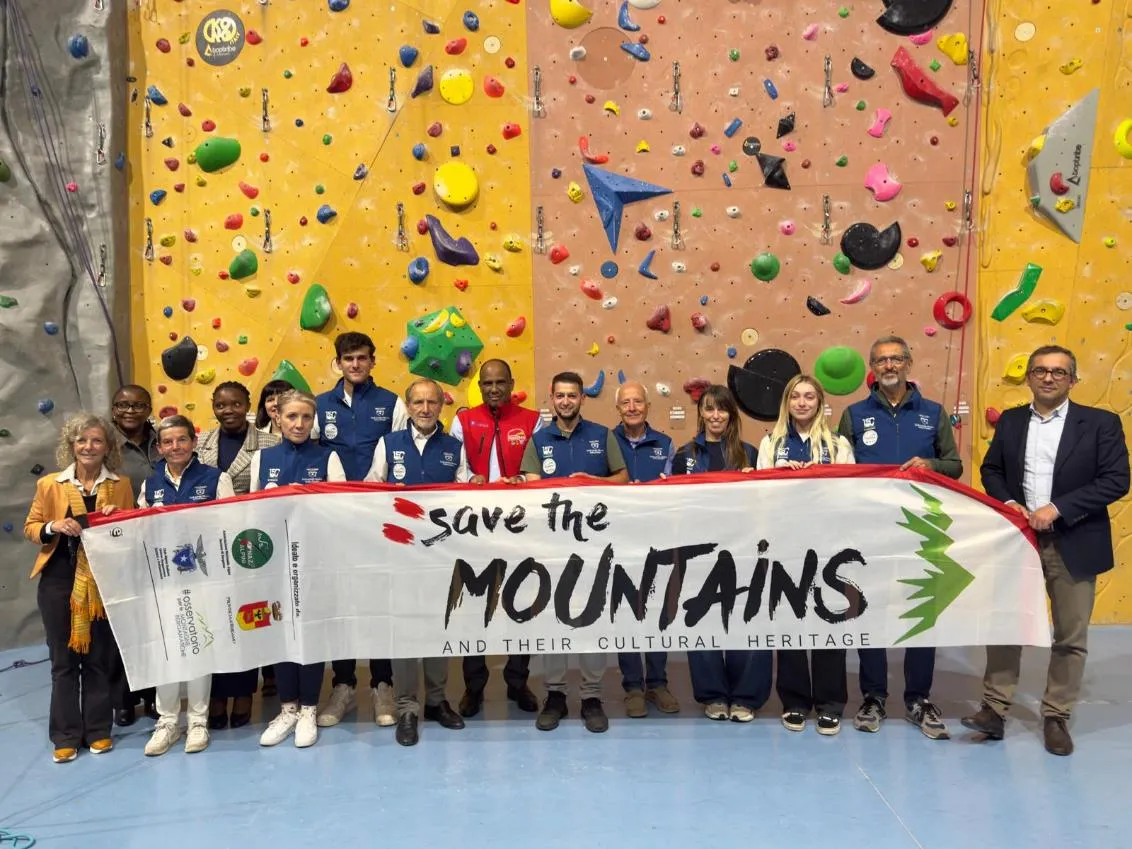
A meeting at Moshi Co-operative University. An evening in Dar es Salaam with Italy’s Ambassador, Giuseppe Coppola, celebrating Italian sport. Then Tanzania’s new Ambassador to Italy, Hon. Mbarouk Nassor Mbarouk, at the University of Bergamo and CAI Bergamo’s Palamonti.
2025 · Kilimanjaro and Tarangire
The official expedition
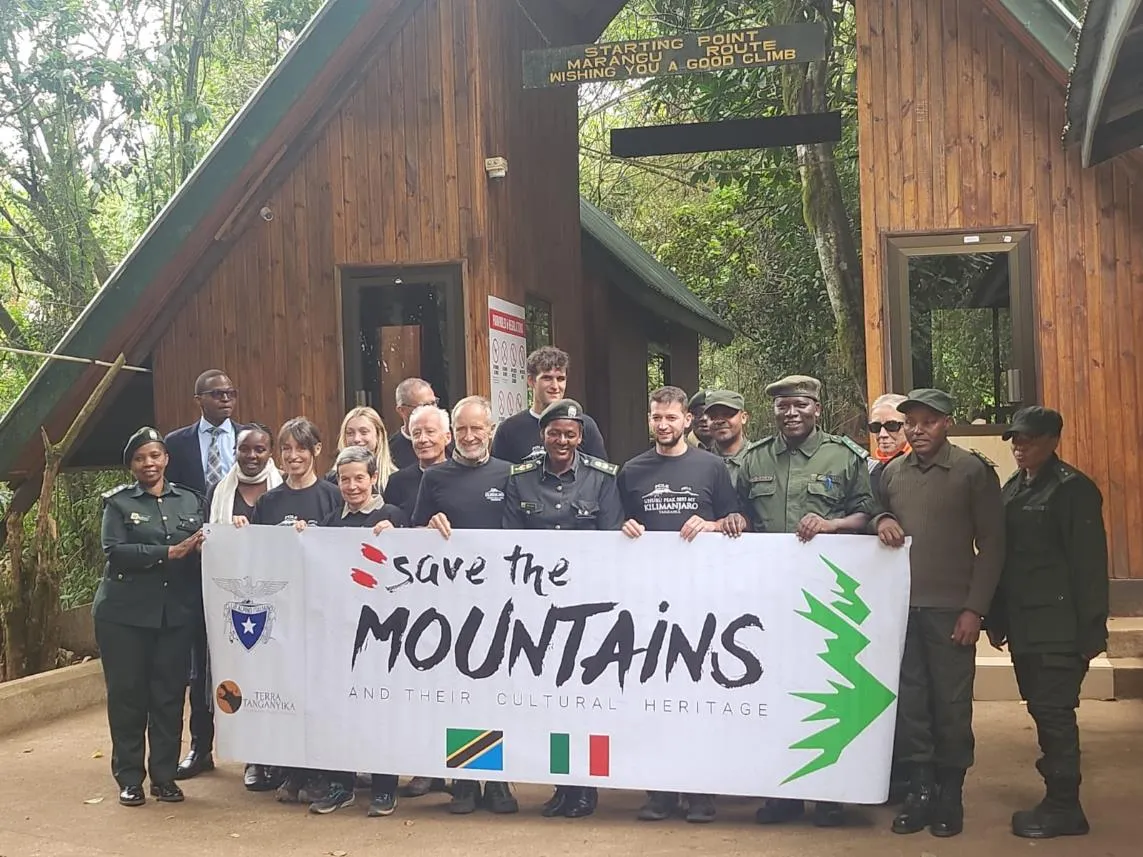
Kilimanjaro Expedition 2025 climbs by the Umbwe route, visits the Materuni waterfalls and Tarangire National Park, and holds official meetings with TANAPA, KINAPA and Ambassador Coppola.
The team: Dario Nisoli, President of CAI Bergamo; Paolo Valoti, expedition leader; Damiano Carrara, CNSAS alpine rescue delegate for the IV Orobica zone; Benigno Carrara, President of the CAI Bergamo medical commission; with Elisabetta Valoti, Francesca Masper, Laura Ruberti, Lorenzo Cuni and Monica Brembilla.
In KINAPA’s words
“The conservation of Kilimanjaro National Park is a vital livelihood for the community and for the country’s economy. We hope you will be good ambassadors for our beautiful park.”
A portion of every booking with us supports this work.
Know the place you’re travelling to
Ask us about the project, our partners and how your journey connects to the work.